There's a point where every conventional drain-clearing method reaches its limit. The drain snake pushed through but the clog came back in two weeks. The store-bought chemical cleaner barely made a dent. Even the last plumber you hired couldn't explain why your kitchen drains so slowly after a full snaking. If this sounds familiar, you're almost certainly dealing with the kind of buildup that only one technology can truly defeat: hydro jetting.
Professional hydro jetting service is the most powerful drain cleaning solution available in 2026 - not because it uses harsh chemicals, but because it uses something even more powerful: precisely controlled high-pressure water. At pressures up to 4,000 PSI, a specialized hydro jet nozzle doesn't just poke through a clog - it completely restores your pipe to its original, manufacturer-spec diameter. Here's the complete guide to understanding this technology and knowing when it's the right choice for your Thousand Oaks home.
What Is Hydro Jetting and How Does It Work?
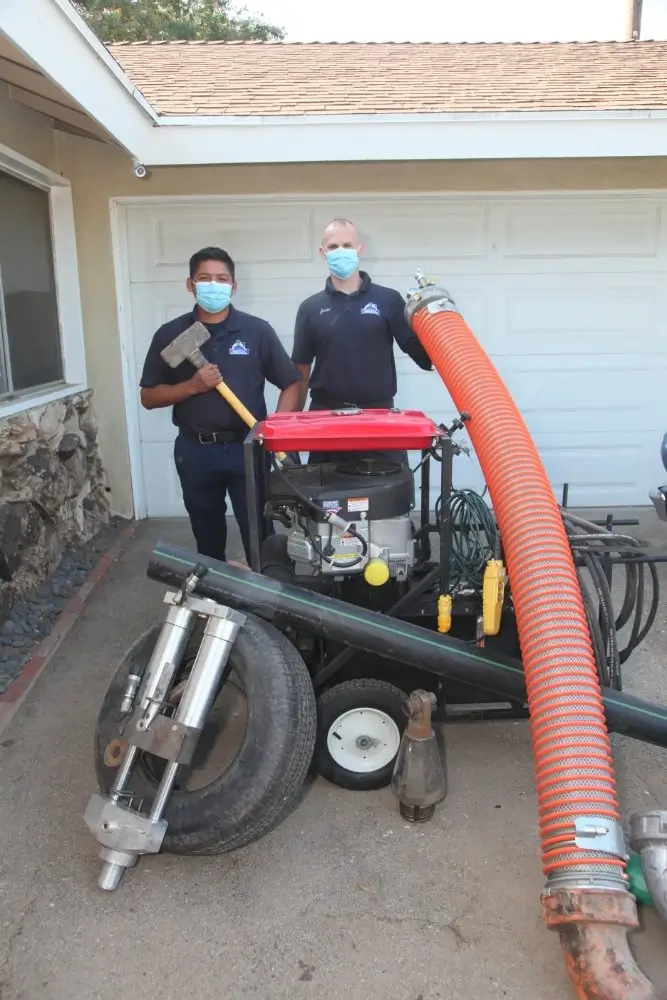
Hydro jetting is a professional drain and sewer cleaning process that uses a high-pressure stream of water - delivered through a specialized nozzle at the end of a flexible hose - to scour the interior walls of pipes clean. Unlike mechanical augering, which creates a hole through a clog and may leave residue behind, hydro jetting essentially pressure-washes your pipes from the inside.
How the Technology Works
A hydro jet system consists of a high-capacity water tank, a powerful industrial pump capable of generating 1,500–4,500 PSI, and a specialized nozzle engineered to direct water jets both forward (to break blockages) and backward (to propel the hose forward and flush debris out of the pipe). The omnidirectional spray pattern ensures complete interior pipe wall coverage - scrubbing away grease, mineral scale, soap buildup, and even tree root tissue as the nozzle moves through the line.
The process begins with a camera inspection to confirm pipe condition - because hydro jetting on a severely cracked or structurally compromised pipe can cause damage. Once the pipe is cleared for service, the technician inserts the jetting hose through the cleanout access point and works methodically through the system, typically starting downstream and working upstream to flush debris toward the main sewer connection.
When Is Hydro Jetting the Right Choice?
Not every drain situation requires hydro jetting - but for certain problems, it's the only method that delivers complete, lasting results. Here are the scenarios where hydro jetting service is clearly indicated:
- Recurring clogs: If the same drain clogs repeatedly within weeks or months, buildup is coating the pipe walls - snaking never addresses this
- Grease-impacted lines: Restaurant drains and kitchen main lines with years of accumulated fat, oil, and grease (FOG)
- Hard water mineral scale: Ventura County's hard water leaves calcium and magnesium deposits that constrict pipe diameter over time
- Tree root infiltration: Early-stage root penetration where roots have entered but not yet caused structural damage
- Pre-lining pipe preparation: Before pipe rehabilitation with CIPP lining, hydro jetting provides the clean surface the liner requires to bond properly
- Slow whole-house drainage: When multiple fixtures drain slowly simultaneously, main line buildup is often the culprit
- Property purchase inspection prep: Buyers and sellers increasingly request hydro jetting to document and restore pipe condition before closing
💡 The "Fatberg" Problem: In kitchen drain systems, cooking grease doesn't flow through and out - it cools and adheres to pipe walls in layers. Over months and years, this buildup can reduce a 4" diameter pipe to effectively 1.5" of usable space. Standard snaking creates a temporary channel through the grease; hydro jetting obliterates it entirely, restoring full pipe capacity.
The Hydro Jetting Service Process: Step by Step
Technician performs HD camera inspection to identify blockage type, location, and verify pipe structural integrity before pressurized water is applied.
Hydro jetting equipment is positioned near the property cleanout. Water supply is connected, pressure is tested, and appropriate nozzle selected based on pipe diameter and blockage type.
The jetting hose is inserted into the cleanout and advanced through the pipe system. The omnidirectional nozzle simultaneously breaks blockages ahead and scrubs pipe walls clean as it progresses.
All loosened debris - grease, scale, root tissue, sediment - is flushed downstream and out through the municipal sewer connection. Nothing is left behind in the pipe.
A final camera pass confirms complete clearance and documents pipe condition. Any structural issues discovered are flagged with video evidence for the homeowner's records.
Hydro Jetting vs. Traditional Drain Snaking: The Complete Comparison
Understanding the difference between these two methods helps you make the right service decision for your situation:
Drain Snaking (Mechanical Augering)
- Mechanically pokes through or retrieves the clog - doesn't clean pipe walls
- Effective for solid object clogs (cloth, toys, paper buildup)
- Cannot remove grease coating, mineral scale, or extensive root systems
- Results are often temporary for buildup-based recurring clogs
- Lower cost per visit, but potentially higher long-term cost if problem recurs
- Appropriate for standard, first-occurrence household clogs
Hydro Jetting
- Completely cleans pipe interior walls - restores full pipe diameter
- Eliminates grease, scale, sediment, root infiltration simultaneously
- Camera inspection ensures safe application on pipes in good condition
- Higher upfront investment - delivers significantly longer-lasting results
- Industry-standard solution for commercial kitchens, main sewer lines, and recurring residential clogs
- Environmentally responsible - pure water, no chemicals
Is Hydro Jetting Safe for All Pipe Types?
This is the most important question to address. Hydro jetting is safe for pipes in good structural condition - including PVC, ABS, cast iron, and clay. The pressure used is calibrated to the pipe material and diameter by an experienced technician.
However, hydro jetting should NOT be performed on pipes with significant existing cracks, collapsed sections, severe joint separation, or advanced corrosion. This is precisely why camera inspection before jetting is non-negotiable - not an upsell, but a genuine safety protocol that protects your plumbing system.
Older Thousand Oaks homes with cast-iron or clay pipes from the 1960s–1980s may require gentler pressure settings or camera-confirmed spot assessment before full jetting. A reputable hydro jetting service provider will always camera-inspect first and recommend the safest, most effective approach for your specific pipe system.
Hydro Jetting for Commercial Properties in Thousand Oaks
Commercial properties - particularly restaurants, food service businesses, and multi-tenant buildings - are ideal candidates for scheduled hydro jetting programs. Under Ventura County health code and fire department regulations, commercial kitchens must maintain functional grease management systems. Hydro jetting the kitchen drain lines quarterly or semi-annually is the most effective way to maintain code compliance and prevent costly emergency shutdowns.
Commercial hydro jetting programs from Drain Pros Ventura include scheduled service visits, documentation of pipe condition for health inspection records, and priority emergency response for businesses enrolled in maintenance agreements.
How Often Should You Schedule Hydro Jetting Service?
- Residential kitchen main lines: Every 18–24 months for average household cooking frequency
- Residential bathroom lines: Every 2–3 years or when slow drainage recurs
- Main sewer lines with tree root history: Annually, combined with camera inspection
- Commercial kitchens: Quarterly to semi-annually depending on volume
- High-use commercial properties: Monthly grease trap service + semi-annual main line jetting
- Post-pipe lining (CIPP): Camera inspection at 2 years, jetting as recommended
What Does Hydro Jetting Cost in Thousand Oaks?
Professional hydro jetting service in Ventura County typically runs $350–$600 for standard residential service, with camera inspection either included or available as a bundled add-on. Commercial main line jetting for larger diameter pipes runs $600–$1,200 depending on line length and access.
When evaluated against the cost of water damage from a backed-up sewer line ($5,000–$15,000 in remediation), recurring emergency snake calls ($150–$300 each, multiple times per year), or pipe replacement necessitated by ignored root infiltration ($8,000–$25,000), hydro jetting is among the most cost-effective preventive maintenance investments available to property owners.
Getting Started With Professional Hydro Jetting
If you're experiencing recurring drain problems, slow whole-house drainage, or known grease accumulation in your kitchen lines, professional hydro jetting service is the definitive solution. The right provider will camera-inspect first, quote transparently, and deliver verifiable results.
Don't settle for temporary fixes when permanent pipe restoration is achievable. Professional hydro jetting services in Thousand Oaks from Drain Pros Ventura use industry-leading equipment and experienced technicians to restore your plumbing system to optimal performance - with results you can see on camera.
Ready to Restore Your Pipes with Hydro Jetting?
Drain Pros Ventura provides professional hydro jetting service throughout Thousand Oaks and Ventura County. Camera inspection + hydro jetting packages available. Call or book online today.
Schedule Hydro Jetting ServiceWant to start with the fundamentals? Explore everything homeowners need to know about professional drain cleaning Thousand Oaks services - from basic maintenance to advanced sewer care - and discover the full range of solutions available in Ventura County.